



Messenger-based Health Information for Cancer Awareness
Timely and accessible health information is essential for cancer prevention and early detection. In Ethiopia, mobile phone access is widespread, while smartphone ownership, messenger app use, and digital skills vary substantially between urban and peripheral settings. Designing equitable digital communication strategies therefore requires a strong understanding of local access patterns, user readiness, and information needs.
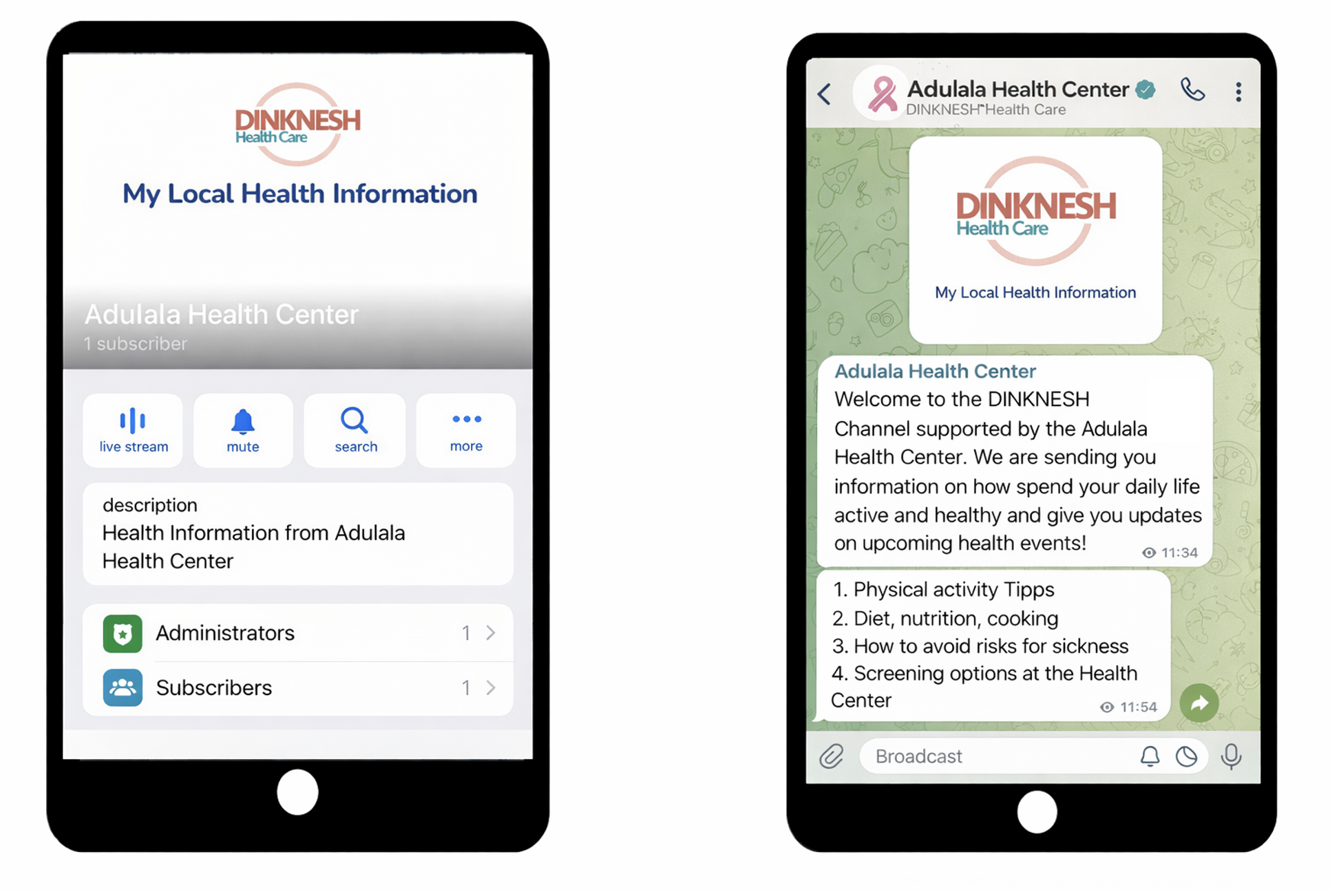
The Digital Global Health Working Group develops and evaluates phone- and messenger-based health communication approaches to support breast and cervical cancer awareness and early detection. This work forms a core component of the DINKNESH programme, alongside app-based patient navigation and eLearning for health professionals.
Evidence-informed Development
Our messenger-based communication activities are informed by multiple community-based needs assessments conducted in urban and peripheral Ethiopian settings. These studies examine:
- access to mobile phones and smartphones,
- use of common messenger applications (e.g. Telegram, WhatsApp),
- eHealth literacy,
- interest in receiving health information via SMS and messenger apps,
- breast cancer knowledge, myths, awareness,
- and perceptions of health communication and provider–patient interaction.
Across settings, early findings indicate high acceptance of SMS-based health information and growing interest in messenger-based communication, alongside marked inequalities in access and digital familiarity. These insights guide the design of hybrid communication strategies that aim to maximise reach while remaining adaptable to evolving user habits.
From Needs Assessment to Intervention
Building on these assessments, we design structured health information campaigns that include Flyer-, SMS- and messenger-based campaigning. Content is culturally adapted, language-specific, and aligned with national cancer prevention guidelines.
Message development follows established public health frameworks and is informed by co-design activities with patients, survivors, health professionals, and other stakeholders including members of the Ethiopian Ministry of Health. Particular attention is given to avoiding information overload and to supporting informed, actionable health behaviours.
Ongoing Implementation Research
We are currently preparing a prospective three-armed implementation study to evaluate the effectiveness of Flyer-, SMS- and messenger-based breast cancer awareness campaigns. The study assesses outcomes such as breast self-examination, clinical breast examination uptake, and cancer-related knowledge under real-world conditions. Flyers are handed out to all women approached during participant recruitment irrespective of study inclusion to ensure that no woman is left behind due to a lack of access do digital devices.
Integration within the Digital Health Programme
Messenger-based health information complements:
- app-based patient navigation supporting referral and follow-up,
- eLearning courses strengthening provider capacity,
- and broader implementation research on cancer care pathways.
Together, these components form an integrated digital–human approach to cancer prevention and early detection in low-resource settings.
Research Outputs
Results from needs assessments and the concept of the prospective study have been presented at international conferences and are currently being prepared for peer-reviewed publication.